From Inspection to Register: A Step-by-Step Guide to How EPCs are Lodged and Published in the UK
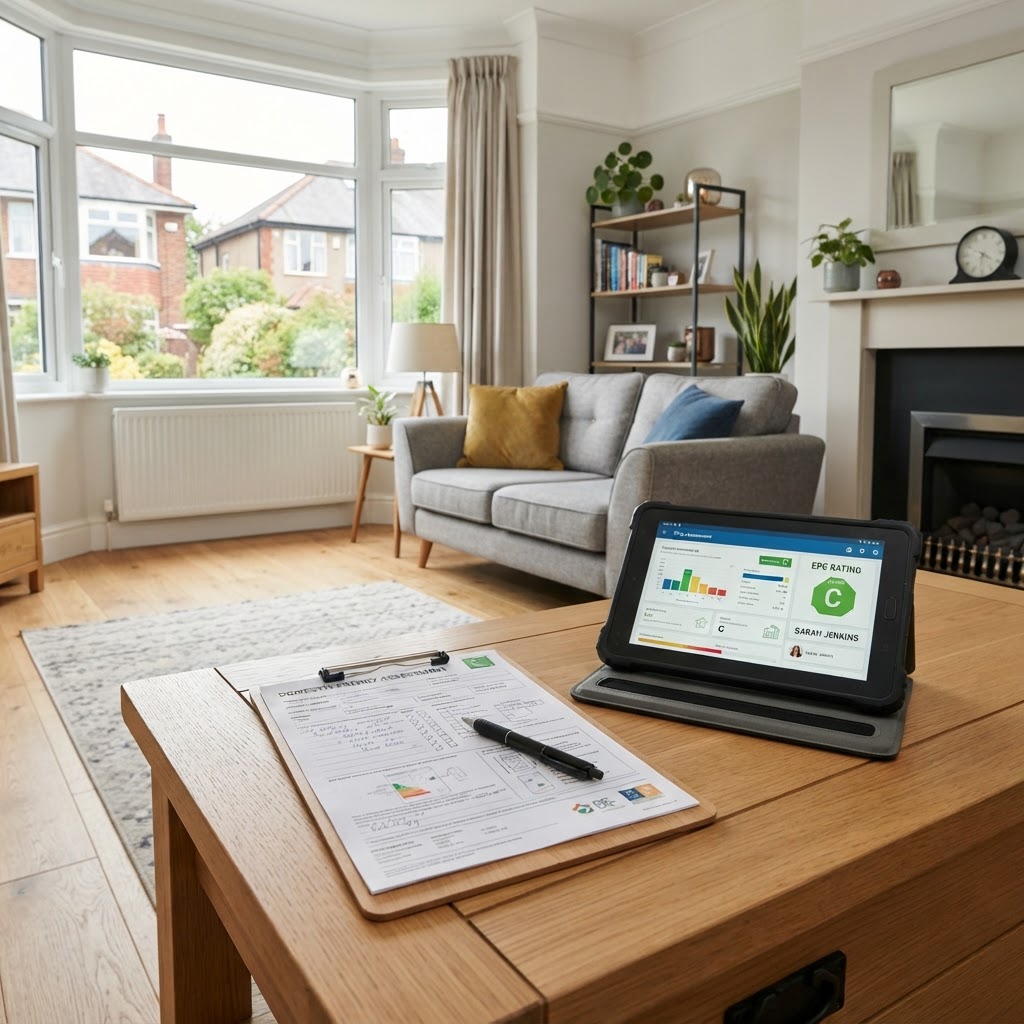
Whether you are selling your home in Stoke-on-Trent or managing a rental portfolio across Staffordshire, understanding the Energy Performance Certificate (EPC) process is essential. An EPC isn’t just a legal formality; it is a vital indicator of your property’s efficiency, running costs, and environmental impact. At Staffordshire EPC, we often receive questions about what actually happens after an assessor leaves a property. How does the data move from your living room to the national database? In this guide, we break down the journey of your EPC from the initial site visit to the final publication.
The Journey Begins: The On-Site Assessment
It all starts with a visit from a qualified Domestic Energy Assessor (DEA). During the inspection, the DEA will examine key features of your home, including wall insulation, heating systems, loft thickness, window glazing, and lighting. This is not a structural survey, but a data-gathering exercise. Using standardised software, our team at Staffordshire EPC meticulously records these details to ensure accuracy.
Data Lodgement: The Technical Step
Once the site visit is complete, the data is uploaded into the government-approved Reduced data Standard Assessment Procedure (RdSAP) software. This system calculates your property’s energy rating on a scale of A (most efficient) to G (least efficient). Once verified, the report is uploaded to the Landmark Register—the official UK government database for all EPCs.
Why Compliance Matters: MEES and Legislation
It is crucial to remember that EPCs are a legal requirement under the Minimum Energy Efficiency Standards (MEES). Since 2020, landlords in England and Wales cannot legally let out a domestic property with an EPC rating of F or G. Failure to comply can lead to significant financial penalties, including fines of up to £5,000.
How to Check Your EPC
If you are unsure of your current rating, you can search the official UK government register using your postcode. If you need a new certificate, Staffordshire EPC can streamline the process for landlords and sellers in the Staffordshire area.
What Happens After Publication?
Once lodged, your EPC is valid for ten years. You will receive a unique certificate number (RRN). This number is what estate agents and solicitors require to list your property on portals like Rightmove or Zoopla. If your property undergoes significant renovations—such as installing new insulation or a modern boiler—it is often worth ordering a new EPC to reflect these improvements, as a higher rating can significantly boost your home’s market appeal.
Expert Guidance in Stoke-on-Trent
Navigating the nuances of energy regulations can be daunting. As your local experts, Staffordshire EPC provides transparent, professional service to ensure your property meets all legal obligations. We pride ourselves on accuracy and efficiency, helping local homeowners avoid the stress of non-compliance.
Ready to Book Your EPC?
Don’t wait until you are already deep into the conveyancing process. If you are based in Stoke-on-Trent or the wider Staffordshire region, get in touch with Staffordshire EPC today. Let us handle your energy assessment so you can focus on your property goals with peace of mind. Contact our team to book your inspection now.