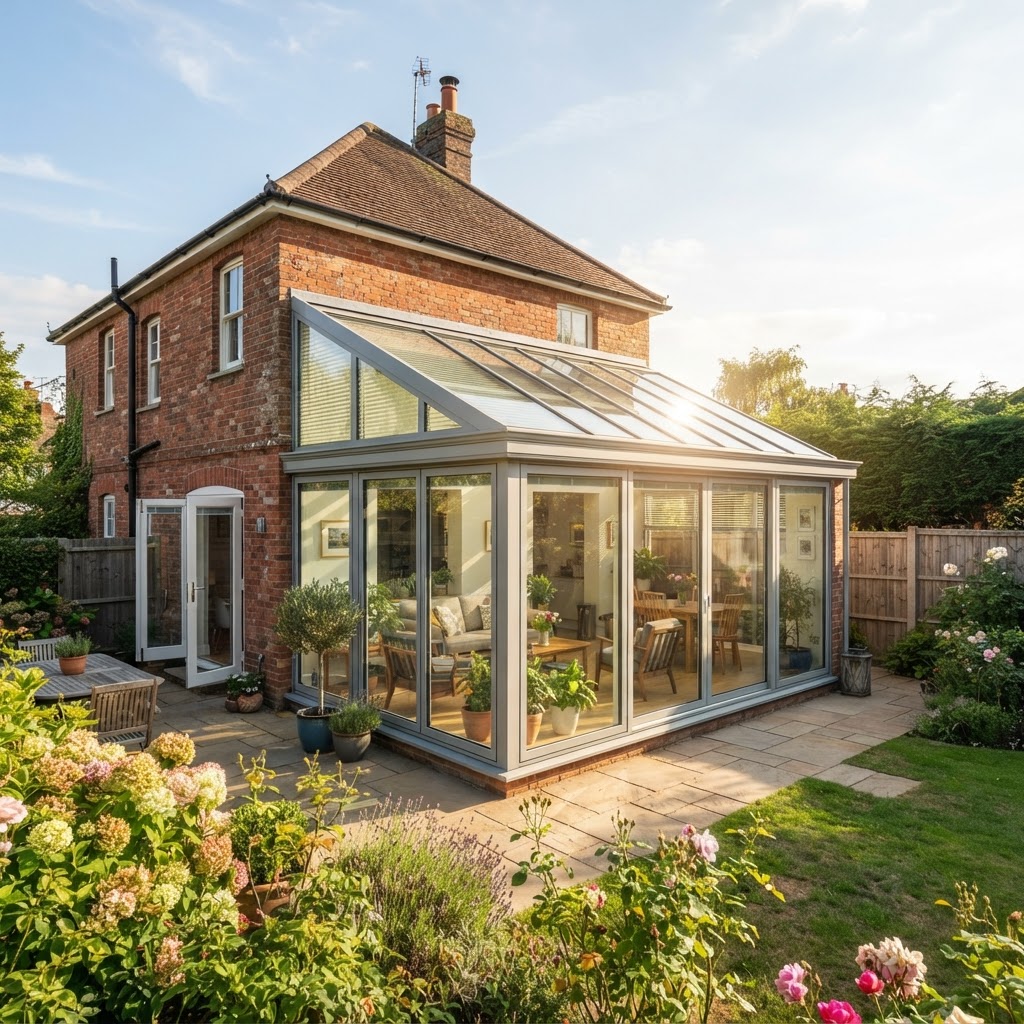
Do Home Extensions and Conservatories Require a New EPC? Your Legal and Compliance Questions Answered
Planning a home extension or a new conservatory is an exciting prospect for any UK homeowner. It’s a chance to add space, enhance your lifestyle, and potentially boost your property's value. However, amidst the excitement of design and construction, a crucial question often arises: "Does this new addition mean I need a new Energy Performance Certificate (EPC)?"
Navigating the world of property regulations can feel complex, and understanding when an EPC is legally required is essential for compliance and avoiding potential penalties. At Staffordshire EPC, your local experts in Stoke-on-Trent and across Staffordshire, we’re here to demystify these requirements for you.
This in-depth FAQ article will answer your most pressing questions about EPCs for home extensions and conservatories, ensuring you’re fully informed and legally compliant.
Understanding the Basics: What is an EPC?
Before diving into extensions and conservatories, let’s quickly recap what an EPC is. An Energy Performance Certificate is a document that rates the energy efficiency of a property on a scale from A (most efficient) to G (least efficient). It also provides an indicative cost of energy and recommendations for improving the property’s energy performance.
Crucially, an EPC is required whenever a property is:
- Built
- Sold
- Rented
It is valid for 10 years.
When is a New EPC Required for Property Changes?
The key to understanding whether you need a new EPC lies in the definition of a 'dwelling' and how significant the changes are to the property's overall energy performance.
Home Extensions: A Significant Change
Generally, if you undertake a significant extension to your home that creates a new, distinct living space, you will likely need a new EPC. This is because the extension will have its own heating, lighting, and insulation, which will affect the property's overall energy efficiency rating.
When does an extension trigger a new EPC?
- Increased Floor Area: If the extension significantly increases the total floor area of the property, it’s a strong indicator that a new EPC is necessary.
- New Heating System: If the extension requires a new, separate heating system or an extension of the existing one that fundamentally changes its capacity or efficiency.
- New Electrical Circuits: While not the primary driver, major new electrical installations for lighting and power in the extension can contribute to the need for reassessment.
- Building Regulations: If the extension requires new Building Regulations approval, this often goes hand-in-hand with the need for an updated EPC.
Practical Advice: When planning your extension, consult with your builder and, ideally, a qualified Domestic Energy Assessor (DEA) like those at Staffordshire EPC. They can advise on the energy efficiency measures that will be required to meet current Building Regulations for new builds or extensions, and help you plan for the EPC assessment.
Conservatories: It Depends on the Design
The requirement for an EPC for a conservatory is more nuanced and depends heavily on its design and how it integrates with the main house.
When a Conservatory Might NOT Require a New EPC:
- Externally Accessed: If the conservatory is a standalone structure with its own external access and is not heated by the main house's central heating system.
- Minimal Integration: If it's a simple, unheated conservatory that doesn't significantly alter the thermal envelope of the main dwelling.
- Separate Metering: If it has entirely separate utility metering.
When a Conservatory Might Require a New EPC:
- Part of the Main Dwelling: If the conservatory is built with a foundation, has been structurally integrated into the main house (e.g., with a large opening, no doors separating it), and uses the main heating system.
- Heated Space: If it is designed to be a fully habitable, heated room, effectively becoming part of the main living space.
- Significant Additions: If the conservatory is so substantial that it significantly changes the overall size and energy profile of the property.
The '75% Rule': A common guideline, though not a strict legal definition for EPCs in all scenarios, is that if a conservatory is considered 'habitable space' and is heated, it may need to be included in the EPC. If it remains a separate space with its own heating (or no heating) and doors leading to the main house, it might be treated as an attached outbuilding. However, when in doubt, especially if it's a high-spec, integrated conservatory, assume an EPC reassessment will be needed.
Practical Advice: If you’re unsure about your conservatory’s status, contact Staffordshire EPC. We can conduct an assessment and give you a definitive answer based on its construction and integration with your home.
Legal Requirements and Potential Penalties
Minimum Energy Efficiency Standards (MEES)
For rental properties, the Minimum Energy Efficiency Standards (MEES) regulations are crucial. Currently, landlords cannot grant new leases for properties with an EPC rating below E. While extensions and conservatories don’t directly change the existing EPC of a rented property, if the addition is substantial enough to require a new EPC, and that new EPC falls below an E rating, the property would become non-compliant for new tenancies.
Selling or Renting a Property
If you are selling or renting out a property that has undergone significant alterations like a new extension, and these alterations necessitate a new EPC, you must obtain this before marketing the property.
Failure to provide a valid EPC when legally required can result in significant penalties. For England and Wales, this can be a fine of up to £5,000. For rental properties, landlords can face fines of £5,000 or 10% of the rateable value of the property, whichever is higher, for non-compliance with MEES.
Practical Advice: Always ensure you have the correct, up-to-date EPC for your property before listing it for sale or rent, especially after major renovations.
When to Get a New EPC: Key Triggers
Here’s a quick summary of when you should most definitely consider getting a new EPC:
- Building a New Dwelling: Even if it's a small annex, it likely needs its own EPC.
- Substantial Home Extension: Creating new living space, significantly increasing floor area.
- Major Renovation Affecting Thermal Envelope: If you've significantly improved insulation or replaced heating/hot water systems across a large portion of the house.
- Converting a Property: Changing the use of a building (e.g., commercial to residential).
- Dividing a Property: Splitting a larger dwelling into multiple units.
Staffordshire EPC: Your Local Energy Experts
At Staffordshire EPC, we understand the complexities of Energy Performance Certificates and their application to property modifications. Based right here in Stoke-on-Trent, we serve homeowners, landlords, and estate agents across Staffordshire and the surrounding areas.
Our accredited Domestic Energy Assessors are knowledgeable about the latest building regulations and EPC requirements. We can provide:
- New EPCs for new builds and extensions.
- Domestic Energy Assessments for existing properties.
- Advice on improving your EPC rating.
Don't let uncertainty about EPCs add stress to your home improvement project or property transaction. Ensure you are legally compliant and maximising your property’s energy efficiency.
Take Action Today!
Whether you’re planning a dream extension, letting out a property, or selling your home, understanding your EPC obligations is vital.
Contact Staffordshire EPC today for a clear, no-obligation quote and expert advice on your Energy Performance Certificate needs. Let us help you navigate the regulations with confidence.
Call us on [Your Phone Number] or visit our website at [Your Website Address] to book your EPC assessment.